WHAT IS CELIAC DISEASE?
Celiac Disease is a chronic autoimmune disorder and not an allergy, caused by intolerance to gluten. In simple words, it affects those children who have the genetic potential for the condition and the condition is triggered by indigestion of products that contain gluten. Gluten is a protein that is found in many grains – wheat, barley, and rye. It provides no essential nutrients and is common in foods such as bread, pasta, pizza and cereal.
While there is not specific gene that causes the disease, the indigestion of foods containing gluten are majorly responsible. The indigestion starts a chain reaction that results in an inflammatory response in the intestine leading to damage to the lining.
Children with celiac disease have an immune reaction triggered by the consumption of gluten that causes a chain reaction resulting in an inflammatory reaction in the intestine. It subsequently damages villi, small finger-like projections found along the wall of the small intestine. When the villi are damaged, the body is not able to absorb nutrients from the food leading to malnourishment. Infants affected by this disease are unable to gain weight and height as they should.
WHAT DOES CHRONIC AUTOIMMUNE DISORDER ACTUALLY MEAN?
An autoimmune disorder or autoimmune disease is a condition in which one’s own immune system begins to attack the body. The body’s immune system actually stands guards against bacteria and viruses; in an autoimmune disease, it doesn’t by releasing certain proteins called autoantibodies that attack healthy cells. The problem is that doctors and researchers are still don’t know what causes autoimmune diseases. And since the exact cause is unknown, the disease is usually life-long or chronic.
WHAT ARE THE SYMPTOMS OF CELIAC DISEASE?
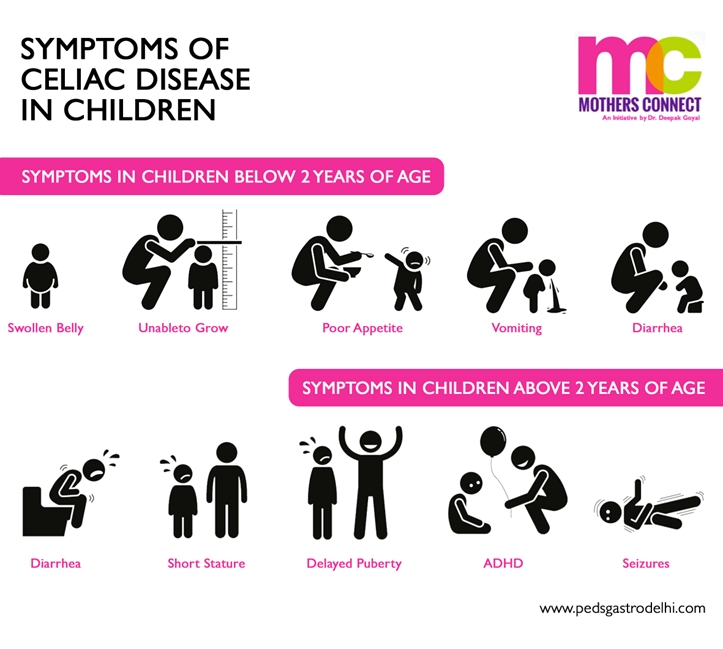
Since Celiac Disease damages the lining of the intestines, the symptoms are mostly gastrointestinal symptoms, such as chronic diarrhea, decrease appetite, bloating, abdominal pain or discomfort, poor weight gain or weight loss and in some cases also constipation.
Most kids are diagnosed with it when they’re between six months and 2 years old – the age when children get their first taste of gluten in foods.
For some children, the problems with the disease start slowly with varying intensity of the symptoms that could be worse one week and not as bad in the next week. This, in many cases, leads to a delayed diagnosis of the disease. And Celiac Disease that goes undiagnosed in the long run can lead to serious health issues.
WHO SHOULD YOU CONSULT – A PEDIATRIST OR A PEDIATRIC GASTROENTEROLOGIST?
Celiac Disease is a condition that affects the intestines, that means the symptoms are mostly gastrointestinal, such as stomach aches, diarrhea, etc. While these symptoms may or may not be because of celiac disease, our child’s pediatrician can sort through a screening blood test. And if the screening test shows that a child might have celiac disease, your pediatrician would refer you to a gastroenterologist – a specialist doctor who treats diseases of the gastrointestinal tract (GI Tract). The gastroenterologist would treat the severity of the symptoms and help to manage the disease by keeping it under control.
HOW IS CELIAC DISEASE MANAGED?
Unfortunately, there is no cure yet for celiac disease. While researchers are working on new treatments, for now, the condition needs to be managed with a gluten-free diet. The gluten-free diet helps to heal the intestinal lining that eventually leads to easing of the symptoms.
If your child is diagnosed with celiac disease, the gastroenterologist will guide you about which foods your child can eat and which foods your child should avoid. The gastroenterologist will take the help of a dietician as these dietary changes have a big impact on your everyday life and diet. You, as a mother, need to ensure that your child’s diet does not comprise wheat, barley, rye and related food items. And secondly, it’s important that mothers read the labels of all foods before purchase to avoid exposure to gluten. When in doubt, the safest thing to do is to assume the product contains gluten and not buy it.
For most mothers, this is extremely challenging, and they need proper & regular counselling to manage the disease. And since this is a lifelong disorder, mothers need to remain in constant touch with a pediatric gastroenterologist.
WHAT ELSE CAN MOTHERS DO TO HELP THEIR CHILD WITH CELIAC DISEASE?
If your child is diagnosed with celiac disease, mothers should ensure that they inform the other adults that are a part of their child’s life – teachers, grandparents, aunts & uncles, friends etc. – and also explain how important it is to keep foods with gluten away from their child.
Secondly, teach your child to not accept foods from others. And also ask to ensure that the food is actually gluten-free.
Thirdly, help your child adapt to a gluten-free diet. Take the help of caregivers and teachers to help them understand the importance of a gluten-free diet for them. This, would be challenging and difficult in the beginning, but as time passes, your child will understand which foods are OK and which are not thereby making it easier to have safe meals and snacks.
Finally, reassure your child they are not alone with these dietary problems.
